
Before the wallpaper.
A beautiful pattern begins with a suitable wall. Decide what is behind the finish before choosing what goes on it.
In this guide
The short answer
Before wallpaper installation, the wall should be assessed and prepared to be clean, dry and sound. Resolve recurring damp or damaged finishes before covering them. Then select the wallcovering, confirm its application and care instructions, and calculate the quantity using the actual roll dimensions, pattern repeat and wall measurements.
Check the wall before the pattern
| What you see | What to discuss | Decision before fitting |
|---|---|---|
| Staining or recurring damp | Where the moisture is coming from | Resolve the cause and reassess the surface |
| Loose paint or uneven repairs | A stable, consistent surface | Agree preparation and suitable primer |
| Strong daylight | The specific lightfastness rating | Compare the sample and its product symbols |
| A repeating design | Match type, repeat and batch | Confirm quantities before placing the order |
Which wall earns the pattern?
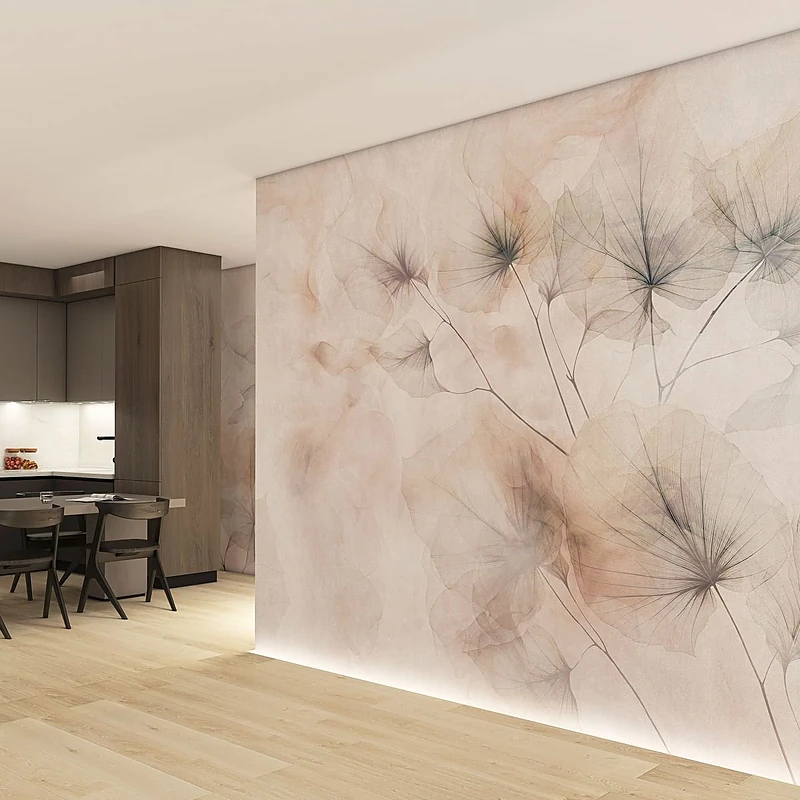
Look at the room from the doorway and from where you usually sit. A feature wall should make sense from those everyday viewpoints. Check how much of the pattern will remain visible behind a sofa, headboard or cabinet. A dramatic sample can lose its purpose if the main part of the design sits behind furniture.
Try the sample against the floor, curtain fabric and upholstery in the room. Look at it in daylight and under the evening lighting you actually use. A large print may work as a focal point; a quiet texture can support other elements. There is no requirement to make every wall equally busy or to match every colour precisely.
For an initial consultation, photograph the whole room and the selected wall straight on. Note the furniture that will remain and any planned lighting changes. In a Rawalpindi or Islamabad home, as anywhere else, the condition of the particular wall matters more than a generic style label. Begin with your room rather than a catalogue room.
What does “3D” describe?
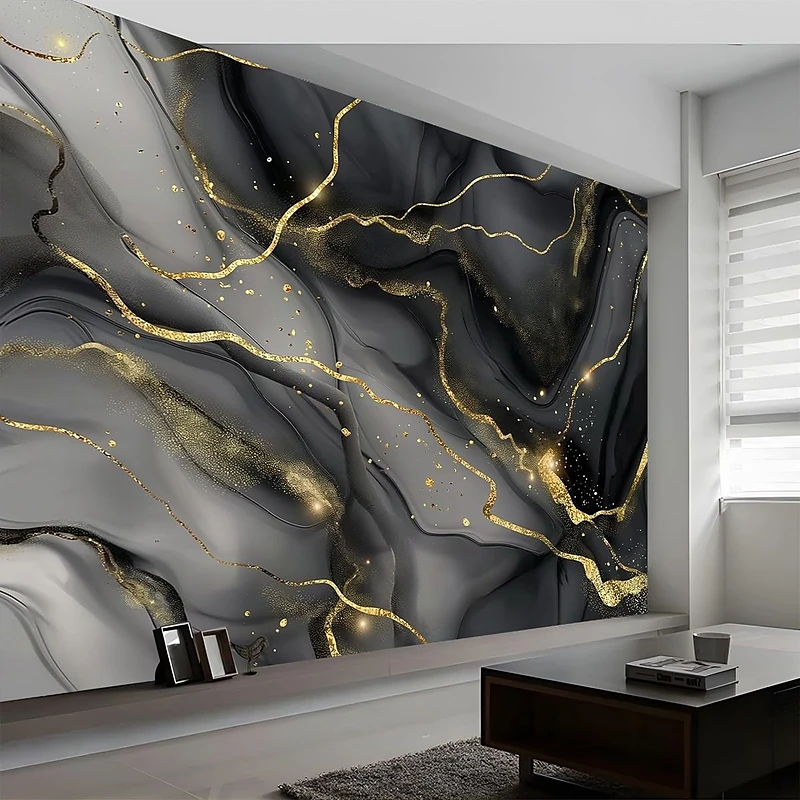
The term “3D wallpaper” can describe an illusion created by a printed design or a material with a surface texture. Ask to see and touch the actual sample. Check the product description rather than assuming a photographed stone, timber or fabric effect is made from that material. The appearance and the construction are separate decisions.
Also ask how the pattern repeats across adjacent lengths. A sample may show a small attractive detail without showing the full repeat. Consider what happens at corners, above doors and around switches. If the design is a mural or a fixed composition rather than a repeating roll, the ordering and positioning questions will be different.
Decide what you want the wall to contribute: a focal image, a change in texture, or a calmer background. That answer helps you compare samples more usefully than choosing on the word “3D” alone. Confirm the exact product reference before quantity calculations begin.
Is the surface ready?
The Wallcoverings Association places surface preparation at the centre of a successful installation: the substrate needs to be clean, dry and sound. In practical terms, ask the installer to identify loose finishes, uneven repairs and other preparation requirements before quoting only for hanging the paper.
Recurring damp, stains or peeling should be assessed before a decorative finish is applied. Wallpaper is not a repair for the underlying cause. Ask what needs attention, who will carry out that work and how readiness will be checked. Avoid a timetable that assumes every repaired or newly finished wall is ready after the same number of days.
Agree how the wall will be prepared for the specific wallcovering. Existing paint, new plaster and previously papered surfaces can require different treatment. Keep preparation in the written scope, including any exclusions. It is much easier to discuss these details before ordering a finish than after a problem appears behind it.
Will it suit this location?
Match the material to the conditions and the way the room is used. Graham & Brown’s guidance distinguishes wallcovering types and application methods. Do not assume that a finish suitable for a dry bedroom will suit a frequently wet or heavily cleaned area. Ask for the product-specific advice rather than relying on the word “vinyl” or “washable.”
The symbols on the roll provide useful information. Rasch’s symbol guide distinguishes care, lightfastness, application and removal characteristics. Check what the chosen product actually permits. Washability is not the same as a promise that any cleaner, scrubbing method or wet location is appropriate.
If direct light reaches the wall, discuss the product’s lightfastness information and view the sample in that location. If the wall is likely to be touched frequently, consider the care instructions before committing. Keep the label and the written instructions so later cleaning is based on the installed material, not a remembered marketing phrase.
Reference: Graham & Brown: wallpaper FAQs · Rasch: wallpaper symbols
How much should you order?
The wall area is only the beginning of the quantity discussion. Roll width and length, wall height, pattern repeat, matching method and trimming all affect how many usable lengths can be cut. Do not subtract every door or window from a simple square-metre total and assume the result is a reliable purchase quantity.
Ask the installer to work from the actual product specification and measured wall. Check batch numbers when the order arrives and discuss the allowance for matching and future repairs. Retaining a suitable spare portion and the product label can be useful if a local repair is needed later; availability of the same design or batch should not be assumed.
Confirm the hanging method and adhesive specified for the selected product and surface. Paste-the-wall and paste-the-paper are not instructions to mix freely. Discuss the treatment of corners, outlets, edges and visible joins. The appropriate expectation for a seam also depends on the material; an invisible join is not a universal property of every wallcovering.
Reference: Graham & Brown: wallpaper FAQs · Rasch: wallpaper symbols
What belongs in the brief?
A useful brief identifies the wall, the exact product, the preparation, the quantity calculation and the installation scope. Note whether old covering removal, moving furniture or working around fitted items is included. Ask how the room should be prepared for the appointment and when the finish can be used and cleaned according to its instructions.
Curtain Hive can discuss residential or commercial wallpaper installation and assess the wall before confirming the work. Bring photographs, approximate dimensions and the samples or references you like. The final decision should combine the desired appearance with a suitable surface, a documented product and a clearly agreed fitting process.
Your project checklist
Tick off what you have ready for the conversation.
0 of 5 ready
Common questions
Can wallpaper cover a damp wall?
It should not be used to conceal an unresolved moisture problem. Have the cause assessed and addressed, then confirm the surface is suitable before installation.
Is all 3D wallpaper textured?
No. Some designs create depth through a printed illusion, while others have a physical texture. Inspect the actual sample and product specification.
Can I calculate rolls from wall area alone?
Area alone is not enough. Wall height, roll dimensions, pattern repeat, matching and trimming affect the quantity. Confirm the calculation for the selected product.
Does washable wallpaper mean waterproof?
No. Read the specific care and suitability symbols and follow the manufacturer’s instructions for the intended location.
Sources & further reading
Technical references supporting this guide. Manufacturer examples describe their own products; confirm the specifications of the option proposed for your project.
- Wallcoverings Association: surface preparation
The importance of a clean, dry and sound substrate.
- Graham & Brown: wallpaper FAQs
Material, application and preparation guidance.
- Rasch: wallpaper symbols
How product symbols communicate care and suitability.
Curtain Hive is a furnishing studio serving Rawalpindi and Islamabad. This guide combines practical planning advice with the cited technical references. Product suitability and quotation scope are confirmed individually. Suggest a correction.